Understanding profitability is one of the most important things any business can spend time working on. However, for many businesses, particularly SMEs, identifying which customers and suppliers contribute to profit (and which don’t!) has historically been difficult. With lots of reports to go through, spreadsheets that need time creating, and then insights often being delivered too late, profitability has often fallen off the radar.
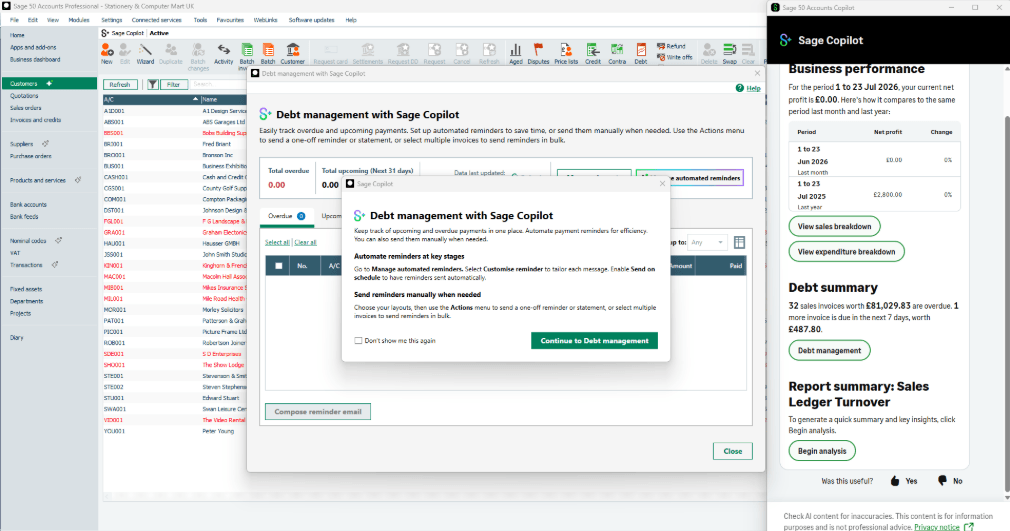
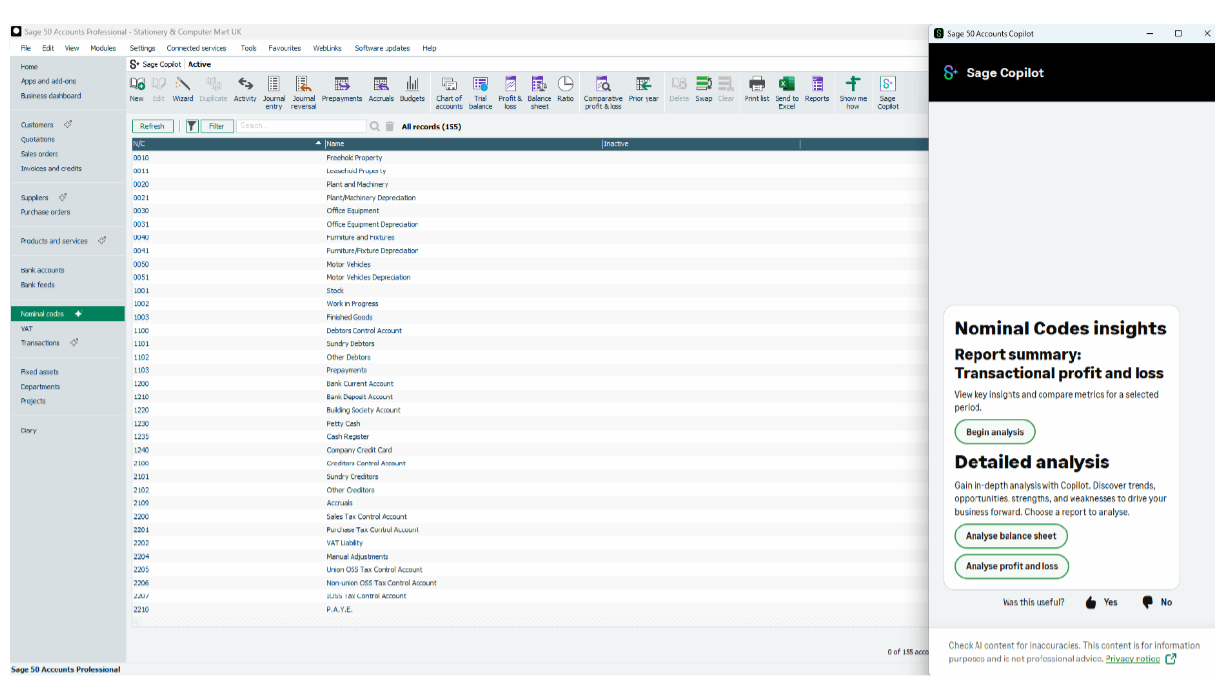
Sage 50 Copilot changes this dynamic entirely. As Sage’s new AI assistant, Copilot transforms accounting data into clear, actionable insights. In this first blog from our new Sage 50 Copilot series, we are going to look at one of its most valuable offerings: customer and supplier profitability insights.
Why Profitability Insights Matter
When starting a business, most people think that making money (turnover) is key. However, profitability is the KPI that should be measured. For example, a customer who buys from the business regularly may not be actually generating that much profit when taking into account things like late payments and returns. Likewise, a supplier offering low prices may influence margins through rising costs.
For the many UK businesses facing inflation, supply chain pressures and tighter margins, understanding profitability at a granular level is key. Sage 50 Copilot provides this clarity by analysing your existing accounting data, and presenting insights in a clear manner.
How Sage 50 Copilot Generates Profitability Insights
Copilot works by integrating directly in Sage 50 accounts, so instead of running multiple reports, simply ask Copilot questions, such as:
- “Which customers were most profitable last year?”
- “Which suppliers have increased their prices during the last quarter?”
- “Show me which customers are declining in profitability.”
Copilot can then analyse data and explain any underlying trends that may be present. So rather than having to be reactive when it comes to decision-making, businesses can be more proactive.
Customer Profitability: Beyond Sales Volumes
Businesses often fall into the trap of thinking that their highest-paying customers are their most valuable. This isn’t always the case, and Copilot can help to look at other factors including margin, payment behaviour and more.
Here is a table which explains the core elements Copilot evaluates when assessing customer profitability:
| Factor | Description | Impact on Profitability |
| Sales Volume | Total value of purchases | High volume doesn’t guarantee high profit |
| Margin | Profit percentage per product | Low-margin products reduce overall profitability |
| Discounts | Price reductions offered | Excessive discounting erodes margin |
| Payment Behaviour | Speed and reliability of payments | Late payments affect cashflow and risk |
| Returns & Credits | Frequency of returned goods | High returns reduce net profit |
| Service Costs | Delivery, support, admin time | High service costs reduce profitability |
When it comes to identifying high-value customers, Copilot looks at customers who purchase consistency, buy high-margin products, pay promptly, and require very little in terms of customer service and support. Copilot can also identify customers who may appear profitable, but are slowly draining the business due to heavy reliance on discount codes, frequent returns, late payments and choosing low-margin products.
Supplier Profitability: The True Cost Impact
Supplier relationships directly influence margins, but this can be hard to analyse without tools like Copilot. Here are the main ways that Copilot looks at supplier profitability within businesses:
| Factor | Description | Impact on Profitability |
| Cost Trends | Price changes over time | Rising costs reduce margin unless pricing adjusts |
| Product Mix | Which products come from each supplier | Some suppliers support higher-margin products |
| Delivery Reliability | Timeliness and accuracy | Poor reliability increases operational costs |
| Price Stability | Frequency of price fluctuations | Stable suppliers support predictable margins |
| Supplier Performance | Quality, returns, communication | Impacts customer satisfaction and cost-to-serve |
One of the great things about having Copilot integrated with Sage 50 is that when suppliers raise prices, Copilot can really quickly identify which products are affected, and which customers also buy those said products. This allows businesses to adjust their prices, or negotiate better terms with their suppliers in order to ensure profitability. On the other hand, Copilot can also highlight suppliers with whom it is worth building a solid relationship with – ones that provide consistently stable pricing; ones that support high-margin product lines; and ones that are reliable so ultimately help reduce operating / administrative costs.
Why Sage 50 Copilot Matters for Businesses
Most businesses don’t have dedicated data analysts, particularly those who are smaller and more likely to be using Sage 50. Copilot brings enterprise-level insights into an every day workflow for businesses. It enables the following:
- Faster, data-driven decision-making
- Clear visibility of customer & supplier performance
- Stronger negotiation abilities and pricing strategies
- Better control of cashflow
- Continuous margin protection
By integrating Copilot with Sage 50 profitability in terms of customers and suppliers becomes something that can be managed proactively, as opposed to falling to the bottom of the pile.
Look out for the next blogs in our Sage Copilot series where we will look at other ways in which Copilot can help your business. If you would like any more information, feel free to contact the expert Sage team at Reality Solutions.
*This article contains general information in order to assist all of our customers and is meant for guidance only – there are no guarantees that the information we provide will be suitable for your particular needs. If you require specific assistance, we recommend that you seek professional guidance on your individual circumstances. Reality Solutions are in no way responsible for any loss or damage arising from any information contained within our articles.